CMS338 Learning Objective 6:
Reflect upon project executions
in relation to client needs
and feedback
Advanced Radiology
Clinical Decision Support (2019)
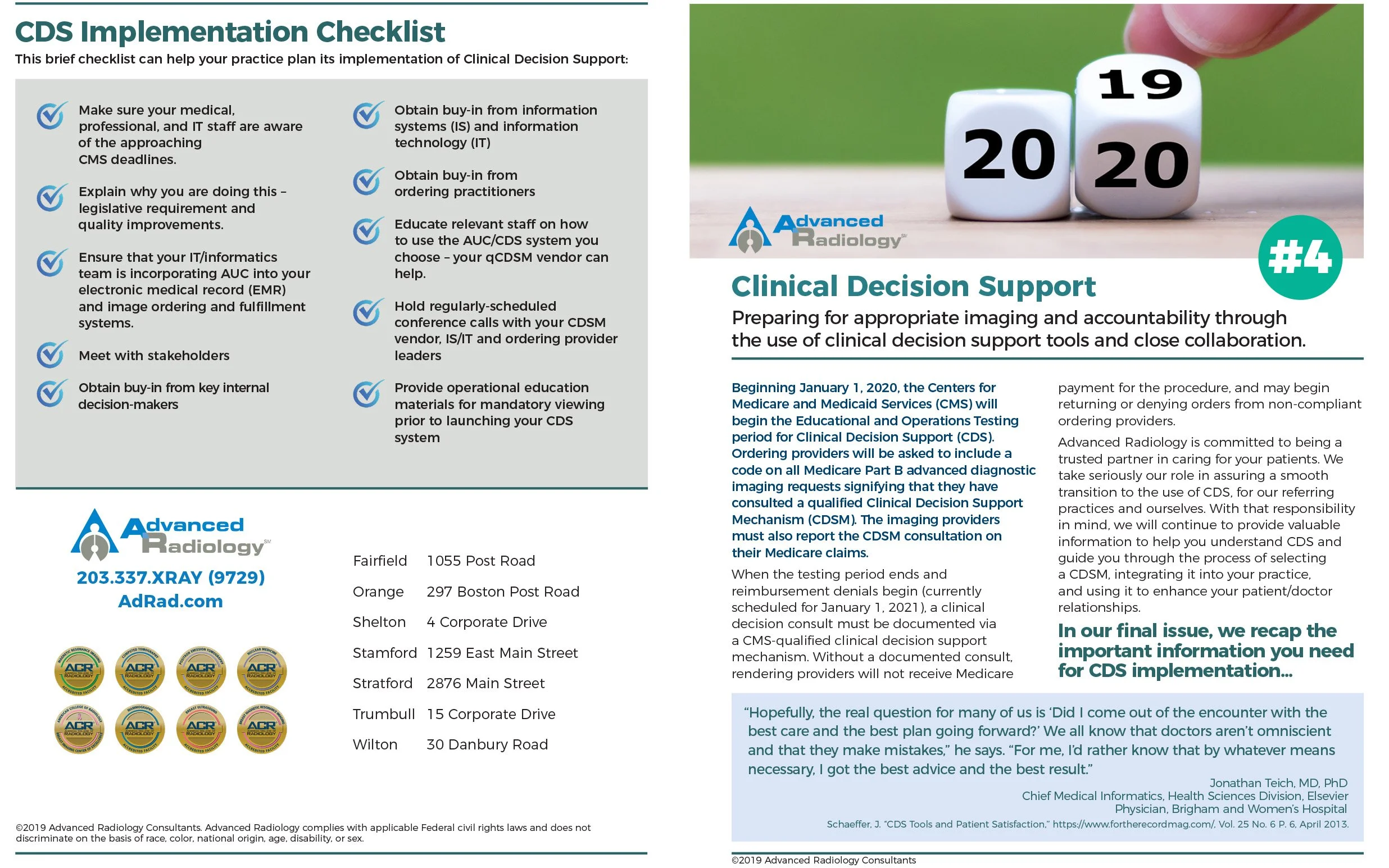
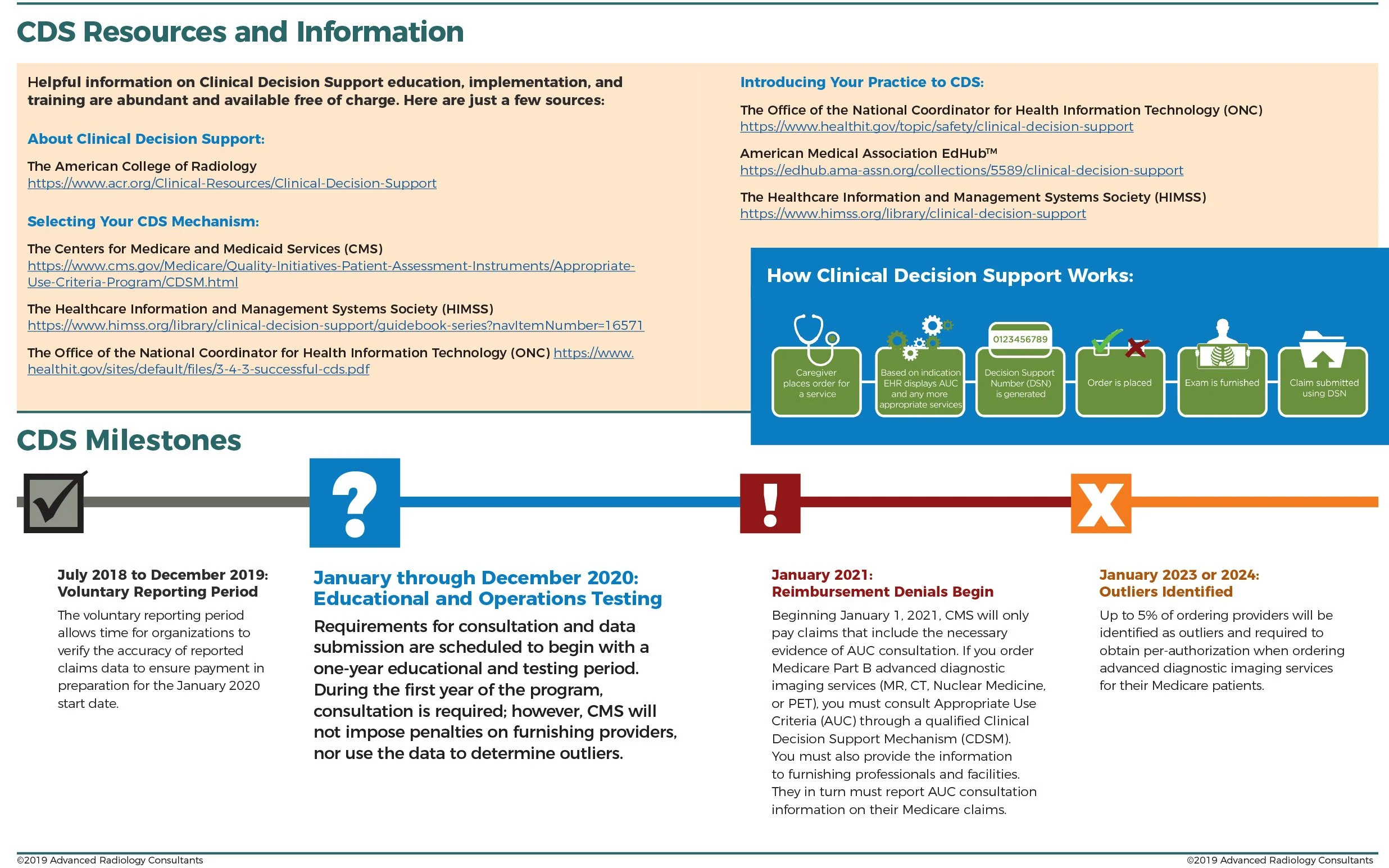
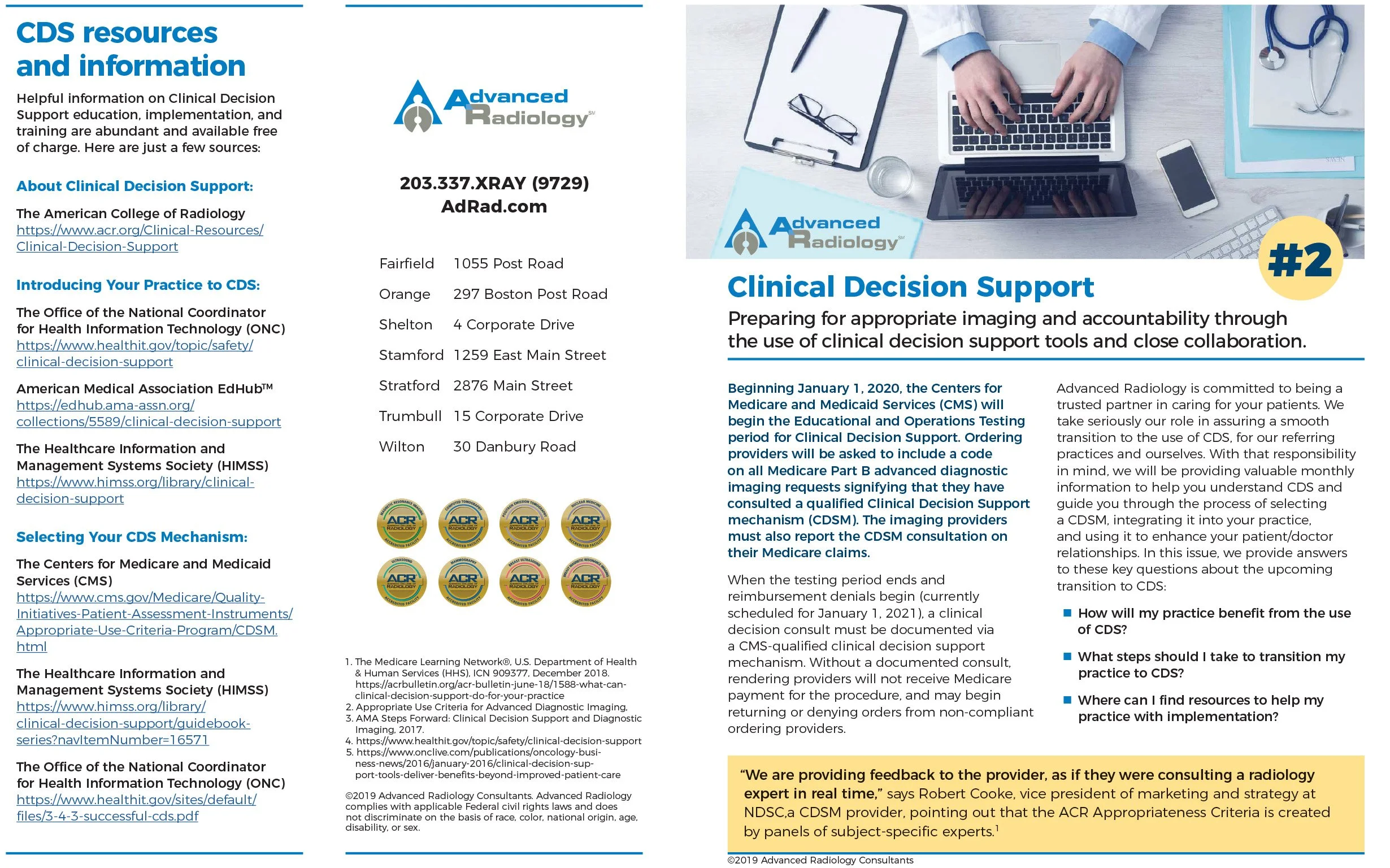
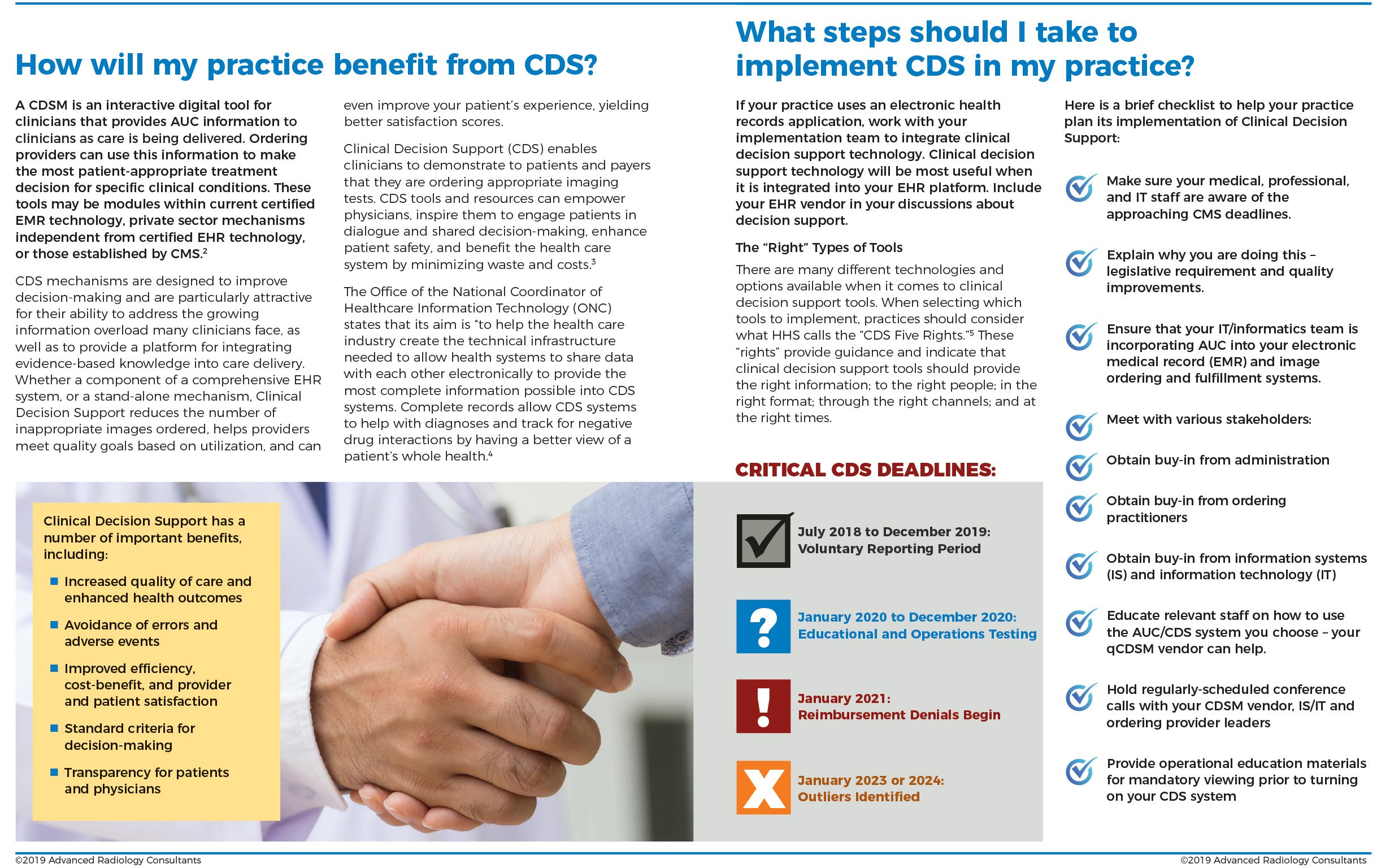
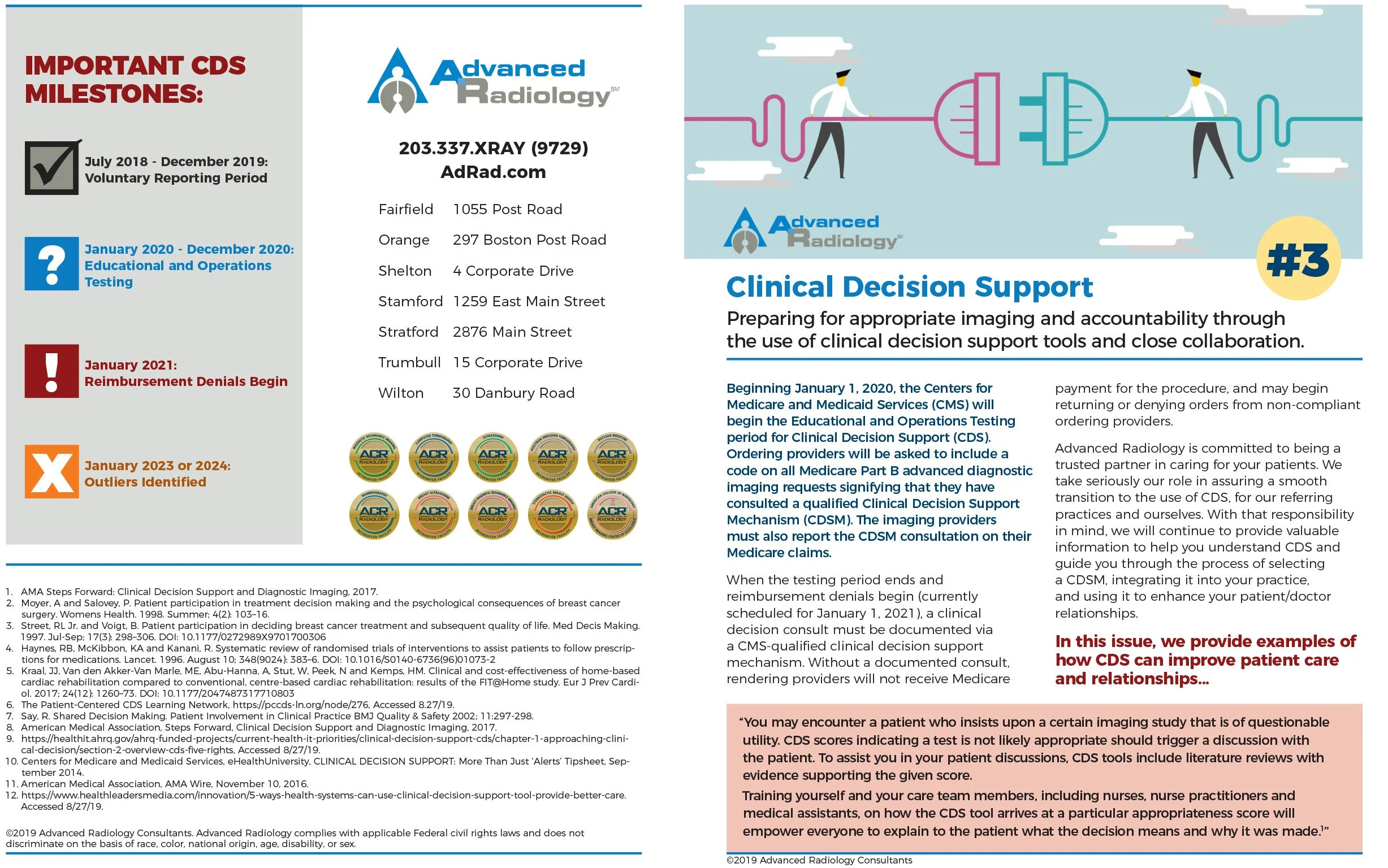
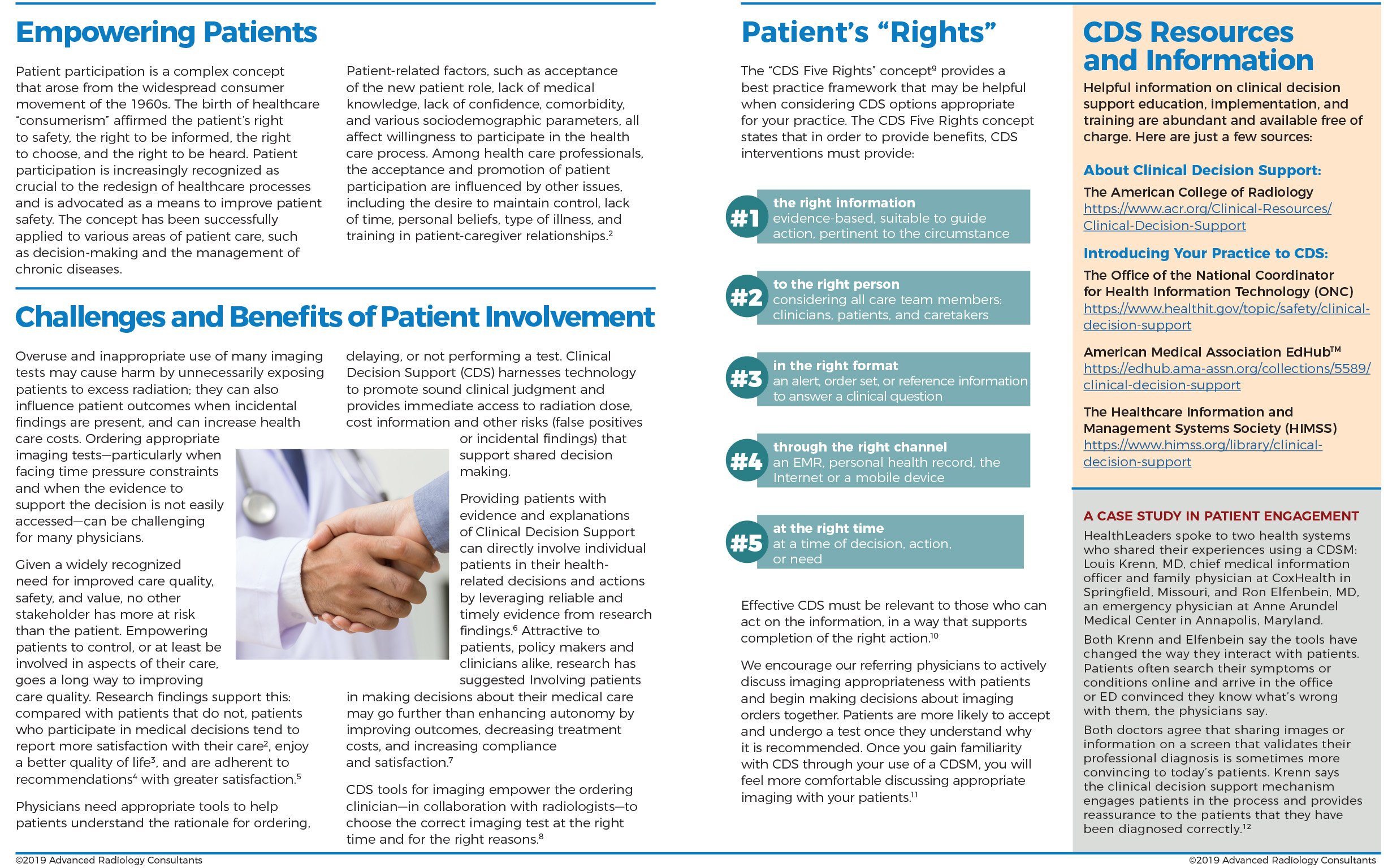
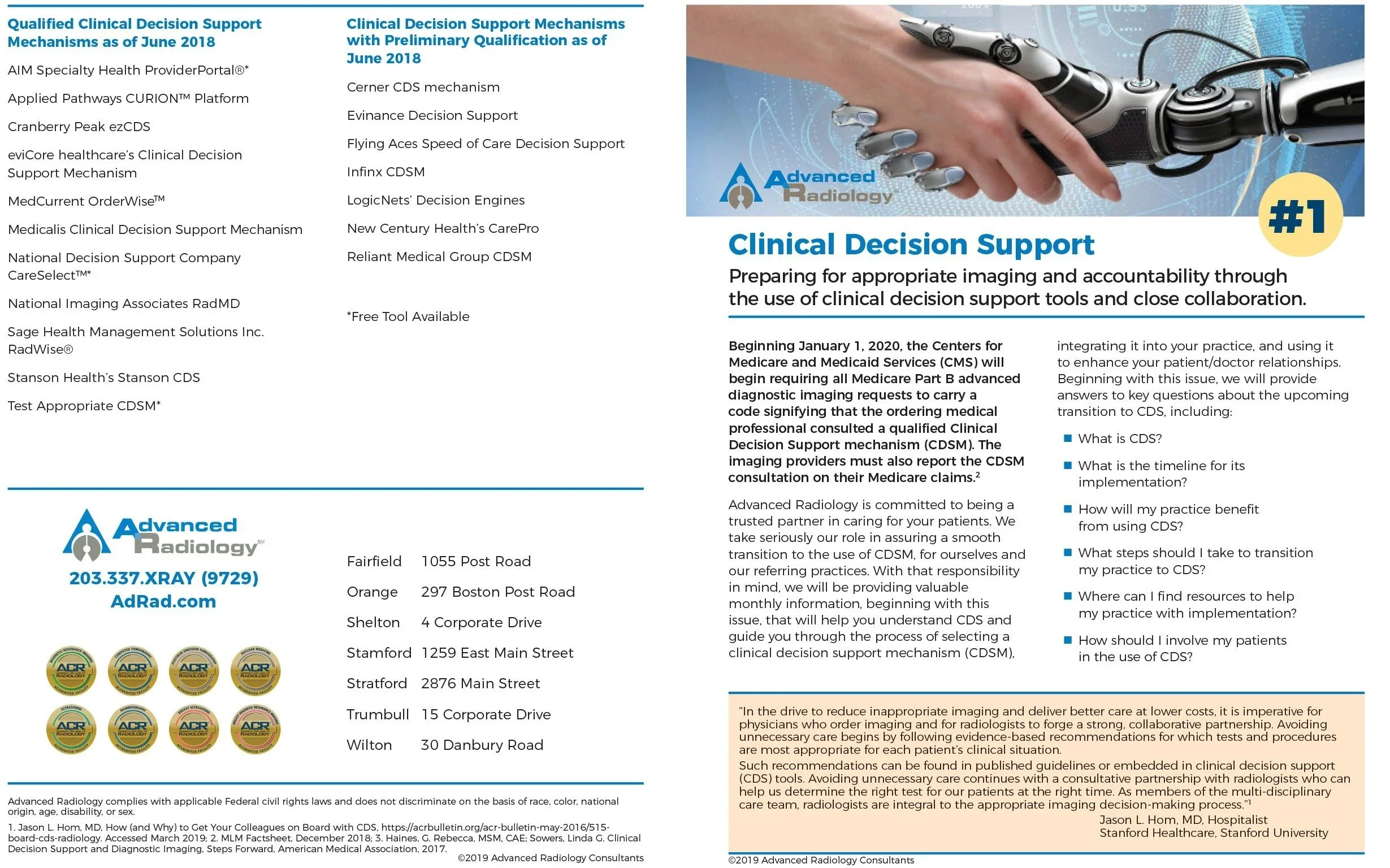
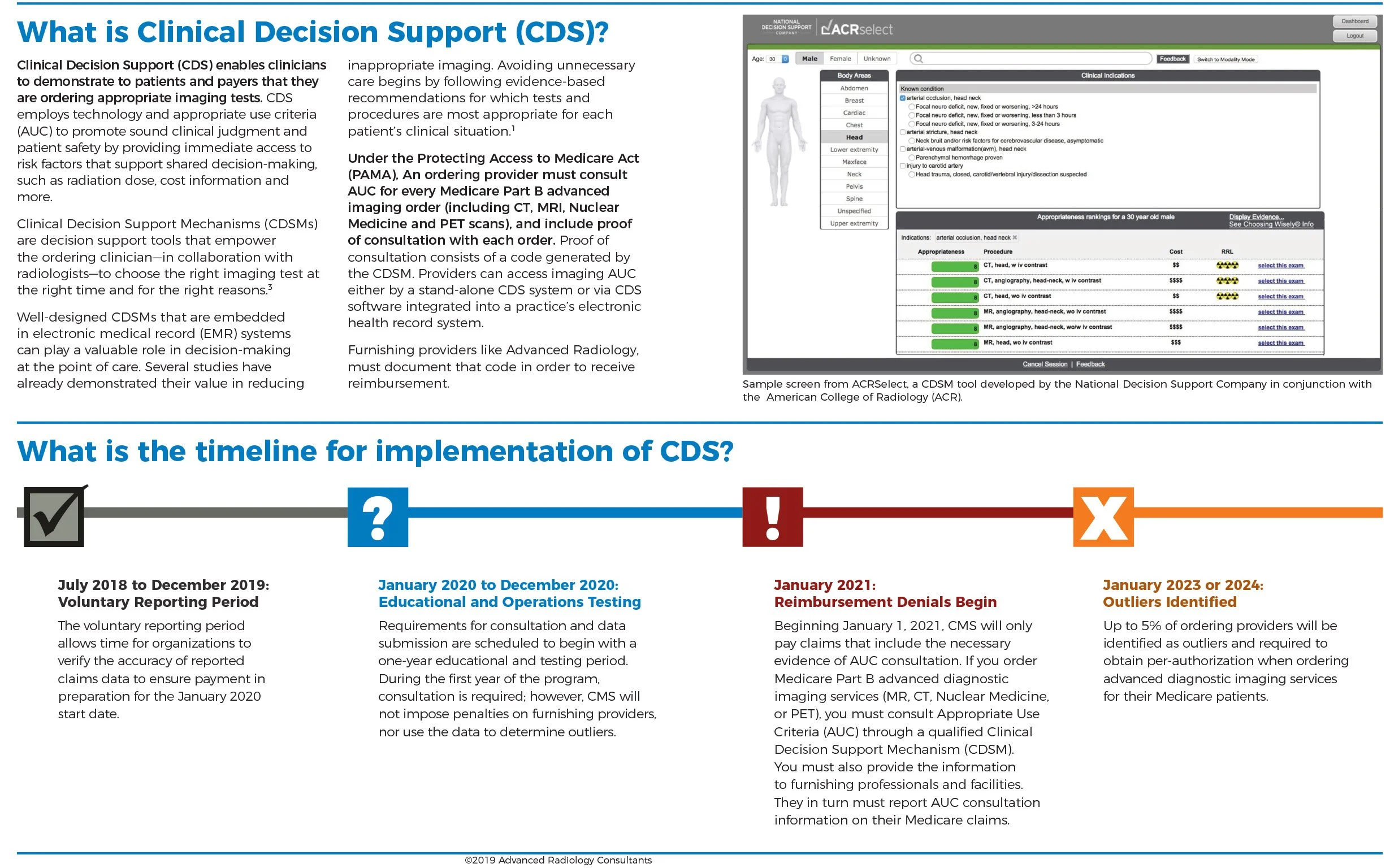
During the early 2010s, the Centers for Medicare and Medicaid Services (CMS) proposed a requirement that all Medicare Part B advanced diagnostic imaging requests carry a code signifying that the ordering medical professional consulted a qualified Clinical Decision Support (CDS) mechanism. This digital application was meant to prevent providers from either over-prescribing or prescribing unnecessary imaging. The requirement was to take effect in January 1, 2020.
Informal surveys conducted by my Practice Liaisons indicated that a significant majority of our referring providers had little to no awareness of the change. Recognizing that any provider abrasion in the prescribing process, caused by our organization or not, would result in providers’ frustration being directed at our call center, I proposed a newsletter series delivering comprehensive information about CDS to our entire group of referring providers (approximately 7,000 at the time). I proposed four monthly installments to be distributed in the months leading up to the requirement taking effect.
The newsletters would offer our providers:
A description of CDS and the timeline for its implementation
The benefits of incorporating CDS into their referral practices
Guidance on how access and use the free online CDS application
Instructions on obtaining a more robust CDS application of their own
Recommendations for implementing CDS into their practice
Thoughts on involving patients in the imaging referral process
Because I was a department of one, I was able to accomplish all copywriting, design, and layout using Adobe Creative Suite applications. Each month’s newsletter was digitally printed, then delivered either by first-class mail or by our Practice Liaisons during sire visits.
The final issue of this newsletter included a survey insert to measure provider awareness of CDS. and indicated that awareness had increased significantly. However, CMS postponed the requirement for use of CDS in late 2019. Following the COVID pandemic, CMS then postponed CDS requirements indefinitely.
Click any image to view the PDF.


Healthfirst Self-Service Templates (2024)
Healthfirst faced a growing backlog of work in the Creative and Marketing departments as stakeholders throughout the company demanded more and more communications be produced targeting providers, while budgets were constrained with regard to growing the creative teams.
The solution I recommended was to relieve the creative team of the responsibility of repeatedly creating what were both the simplest documents and the most frequently requested. These included Provider Alerts, Quick Reference Guides (QRGs), and simple brochures. These typically would have been created by designers and copywriters using Adobe Creative Suite.
I chose an application and fonts that were familiar to all users, and a standard installation on all company devices. I worked with the Creative team to design Microsoft Word templates for each type of document most frequently created. We also provided an education session in which we would assess each users ability to use Word, with the objective of maintaining brand standards and formatting while requiring minimal oversight and review of documents. Our Creative Director and I personally introduced the templates to stakeholders one team at a time, teaching them the correct techniques for creating and saving documents, and obtaining any required Regulatory and Legal reviews.
At the end of the first year of use, the demand for basic documents from our Creative team has been reduced to near zero, and they have been able to work at the “top of their license” on more valuable and satisfying projects. In addition, stakeholders are pleased with the increased amount of control and decreased amount of procedural steps they experience in creating common documents.
Click any image for a larger view.
The first brochure was produced, and was used as a model for subsequent brochures rather than creating a generic template.

Advanced Radiology
Promotional Video (2021)
Totus Lighting Solutions was a new company offering outdoor LED lighting and security systems that were adaptable and scalable to the needs of customers in the retail, manufacturing, and government sectors. Their modular design accommodated both LED lighting and a variety of security cameras and infrared devices, and were remotely monitored and programmable. Working directly with company principals, I developed the following:
Positioning statement:
Totus Solutions is a leading provider of advanced lighting solutions that integrate significant energy saving and cost-effective LED lighting systems with highly sophisticated and innovative security solutions delivered through a single platform.
Value proposition:
Our “smart” lighting products utilize high-grade, low power LEDs together with our patent-pending intelligent power supply to provide superior photometric, longer life, and a unique, scalable platform that can incorporate safety and security network options.
Click the image to view the video on YouTube.